
Spanish desserts are proof that there’s no need to be complicated or require hours in the kitchen to achieve amazing results.
The dulce de leche crepes are the best example of that, as in only 30 minutes, you will have a wonderful dessert ready to be enjoyed.
Keep scrolling down this article, and you will learn how to make dulce de leche crepes step by step, with expert tips for serving and storing.

You, dear reader, support this blog. If you purchase through a link, we earn a small commission. As an Amazon Affiliate, we earn from qualifying purchases.
Pssst…!!?? You can’t get enough of Spanish recipes? Have a look at my other posts:
Background of the Dish
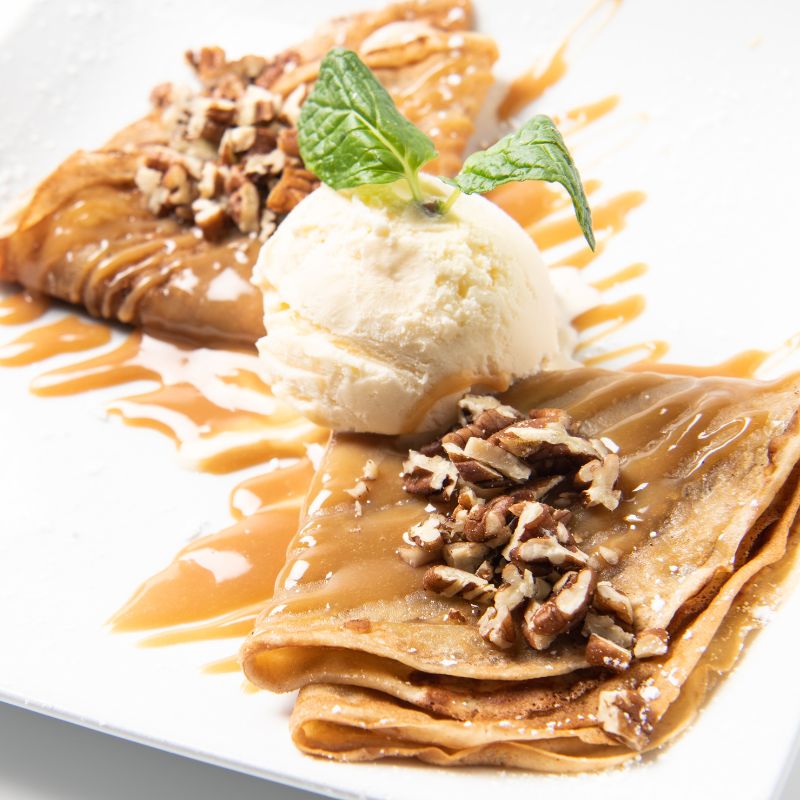
Crepes have long been enjoyed throughout Europe, and Spain quickly embraced them as a simple yet versatile dessert that could be adapted with local and international flavors.
The addition of dulce de leche came much later, thanks to the strong cultural connections between Spain and Latin America.
As Argentine and other Latin American communities grew across Spain, this creamy caramel spread became increasingly popular in home kitchens.
Before long, Spanish cooks began filling delicate crepes with dulce de leche, creating a dessert that combined a classic European recipe with one of Latin America’s most beloved sweets.
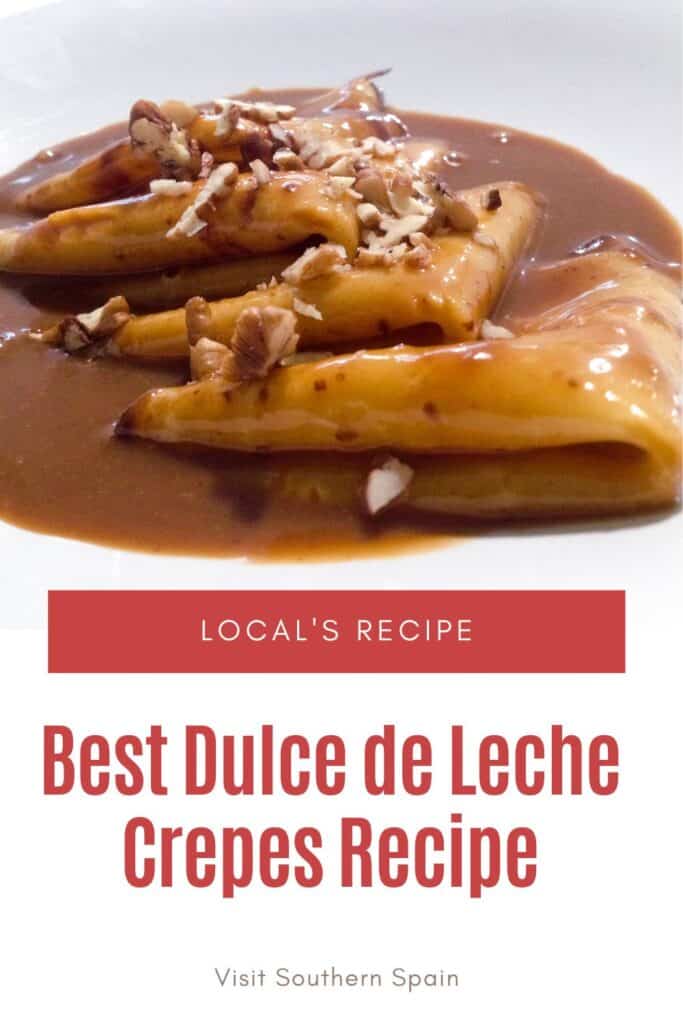
Pin for later!
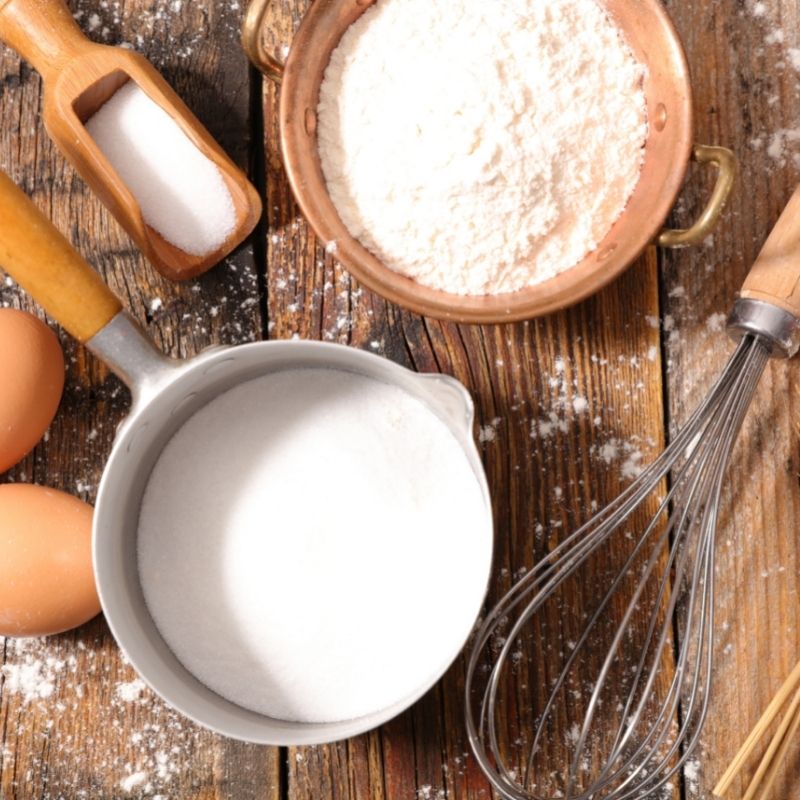
Things You’ll Need for Dulce de Leche Crepes
To prepare the French crepes with dulce de leche filling, you will need flour, sugar, butter, eggs, milk, vanilla extract, and dulce de leche.
You don’t need a crepera (or crepe maker) for this recipe; a skillet or non-stick pan will do the trick.
Ingredients
- 1 cup (125g) All-purpose flour
- 2 eggs
- 1 1/4 cups (300ml) Milk
- 2 tablespoons (25g) White sugar
- 1 teaspoon Vanilla extract
- 2 tablespoons (30g) Melted butter
- 1 pinch Salt
- 1 cup (300g) Dulce de leche
- Extra butter for cooking
How to Make Dulce de Leche Crepes – Step by Step Guide
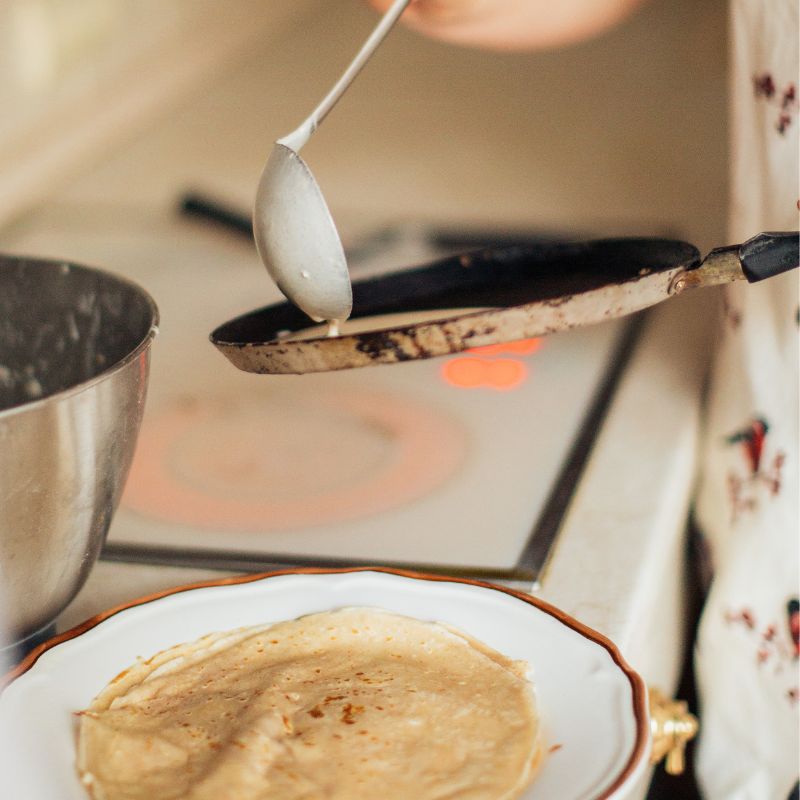
- For the first step in the easy dulce de leche crepes recipe, place the flour, eggs, milk, sugar, vanilla extract, melted butter, and salt in a large bowl.
- After that, whisk everything together until you obtain a smooth and lump-free batter. It is key to double-check for lumps, as otherwise you will have raw flour in your crepes.
- Now, if you want your dulce de leche crepes to be extra smooth and a bit airy, you can let the batter rest in the refrigerator for about 15 minutes before cooking.
- Then, heat a non-stick skillet or crepe pan over medium heat and lightly grease it with butter.
- To continue with the recipe, pour a spoonful of batter into the center of the pan and immediately swirl it around so the batter spreads into a thin layer.
- After that, cook the Spanish-style dulce de leche crepes for about 1 to 2 minutes, or until the edges begin to lift and the bottom turns lightly golden.
- Carefully flip the Spanish crepes and cook the other side for 30-60 seconds more.
- Now remove the crepe from the skillet and take it to a plate, then repeat the process with the remaining batter, lightly greasing the pan as needed.
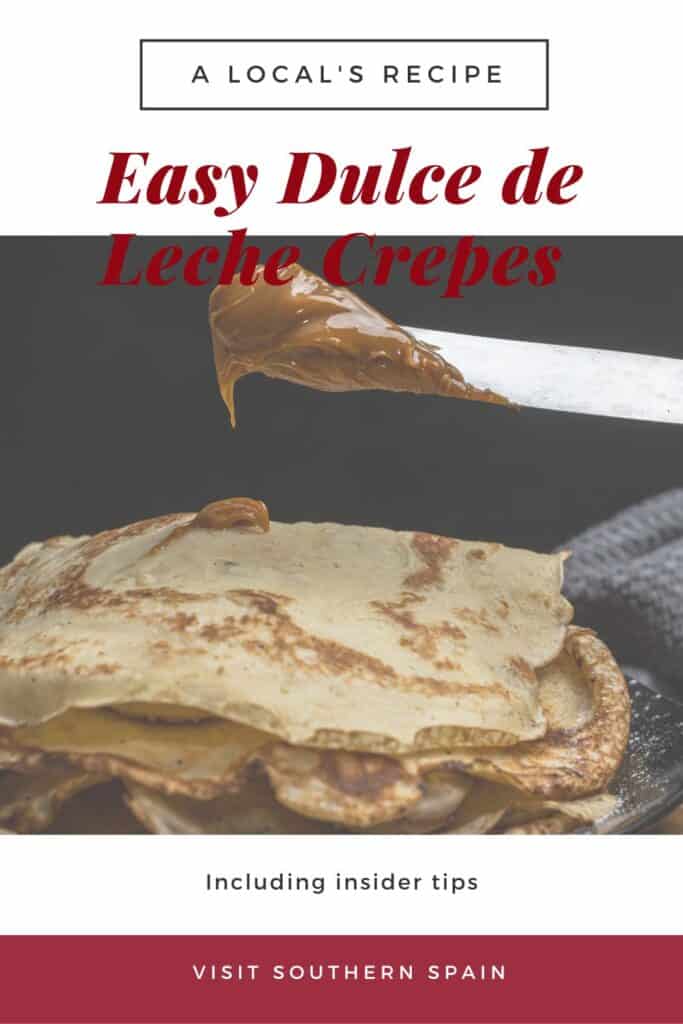
- Once all the crepes are ready, spread a generous spoonful of dulce de leche on top of each. Fold them in half and then in half again to create a triangle shape. You can also roll them if preferred.
- To finish the recipe, serve the dulce de leche crepes warm. As an optional step, you can dust them with powdered sugar or add fresh fruit for an even more delicious finish.
Substitution of Ingredients
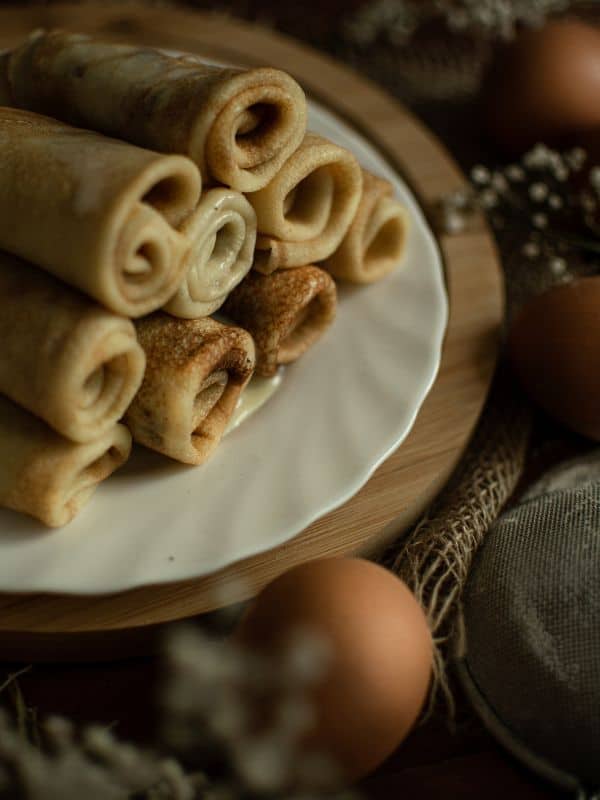
The crepes with dulce de leche are perfect for anyone who likes to customize and give their spin to the recipes they prepare.
For example, you can make them gluten-free by using GF flour and 1/4 teaspoon of xanthan gum (dulce de leche is usually gluten-free, but be sure to check its ingredients).
The best part about making crepes is that you can play with the fillings: for a summery take on the recipe, fill them with Seville orange marmalade.
In colder months, you could switch the dulce de leche for a chocolate spread, if desired.
If you don’t have dulce de leche, then you can make it by slowly cooking sweetened condensed milk until it thickens and develops its characteristic caramel flavor.
Have dulce de leche leftovers?
Apart from dulce de leche crepes, you can prepare other Spanish classics like dulce de leche layer cake and dulce de leche palmiers.
Tips on Serving Dulce de Leche Crepes
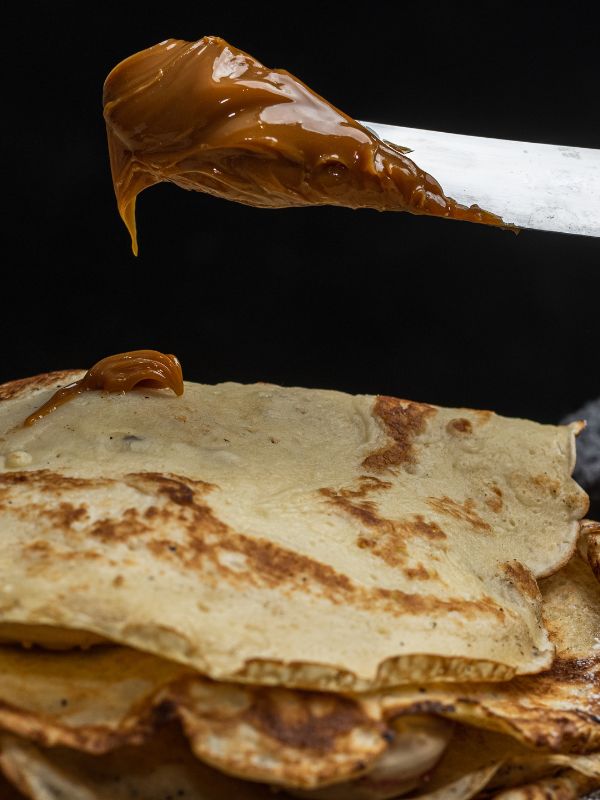
We love this recipe for homemade crepes with dulce de leche, because it has multiple ways of serving and you can enjoy them on more than one occasion.
The thin crepes with dulce de leche filling are the perfect light dessert, and you can pair them with a dark coffee like espresso or Americano to balance the sweetness.
Now, if the dulce de leche crepes will be the main star, then you can top them with chopped and toasted nuts, whipped cream or ice cream, and a drizzle of chocolate sauce.
Want to try more Spanish sweet treats? Then explore our recipes for fartons, pionono, and the classic quesada Pasiega.
How to Store Dulce de Leche Crepes
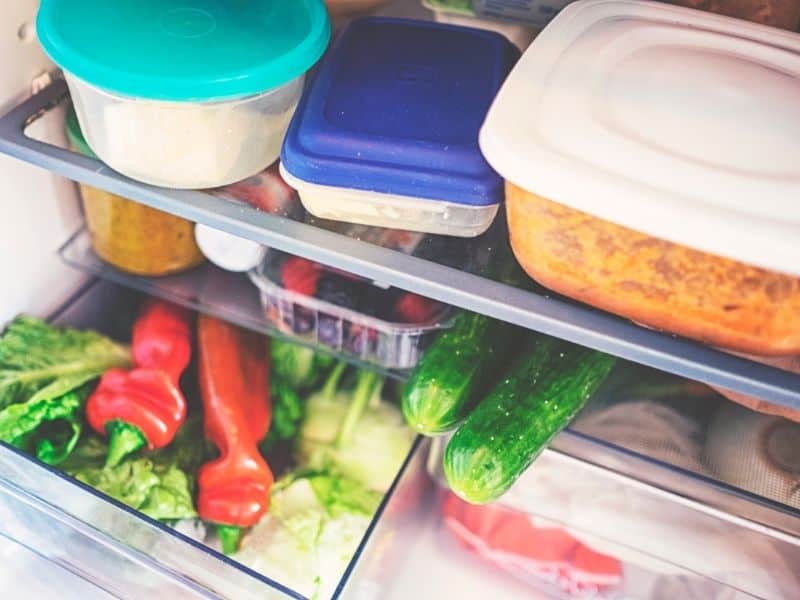
Once you finish preparing the best dulce de leche crepes recipe, you can serve the dessert right away or store it to enjoy later.
If you are planning on storing the dulce de leche crepes, then you have to keep the crepes and the filling separate until serving time.
Do not fill them if you are not going to eat them right away, as the dulce de leche can make the crepes soft and soggy during storage.
Store the cooled crepes in an airtight container, separating each one with parchment paper to prevent sticking.
Keep them in the refrigerator for up to 3 days, and fill them with dulce de leche only just before serving (you can also reheat them in the oven or in the skillet for a few seconds).
Other Andalusian desserts you can make and store for later include the Perrunillas and the Frixuelos de Asturias.
Recipe Card: Dulce de Leche Crepes
Dulce de Leche Crepes Recipe
Spanish recipes are proof that delicious desserts don't have to be complicated or require hours in the kitchen to achieve amazing results.
The dulce de leche crepes are the best example of that, as in only 30 minutes, you will have a wonderful dessert ready to be enjoyed.
Keep scrolling down this article, and you will learn how to make dulce de leche crepes step by step, with expert tips for serving and storing.
Ingredients
- 1 cup (125g) All-purpose flour
- 2 eggs
- 1 1/4 cups (300ml) Milk
- 2 tablespoons (25g) White sugar
- 1 teaspoon Vanilla extract
- 2 tablespoons (30g) Melted butter
- 1 pinch Salt
- 1 cup (300g) Dulce de leche
- Extra butter for cooking
Instructions
- To start preparing the Spanish dulce de leche crepes, place the flour, eggs, milk, sugar, vanilla extract, melted butter, and salt in a large bowl.
- Whisk everything together until you obtain a smooth and lump-free batter.
- For even smoother crepes, you can let the batter rest in the refrigerator for about 15 minutes before cooking.
- Heat a non-stick skillet or crepe pan over medium heat and lightly grease it with butter.
- Pour a spoonful of batter into the center of the pan and immediately swirl it around so the batter spreads into a thin layer.
- Cook the dulce de leche crepes for about 1-2 minutes, or until the edges begin to lift and the bottom turns lightly golden.
- Carefully flip the crepe and cook the other side for another 30-60 seconds.
- Transfer the cooked Spanish crepe to a plate and repeat the process with the remaining batter, lightly greasing the pan as needed.
- Once all the crepes are ready, spread a generous spoonful of dulce de leche on top of each. Fold the Spanish crepes with dulce de leche in half and then in half again to create a triangle shape. You can also roll them if preferred.
- Serve the dulce de leche crepes warm. Optionally, dust them with powdered sugar or add fresh fruit for an even more delicious finish.
Notes
If you aren't the biggest fan of dulce de leche, then you can turn this into sweet crepes with caramel filling by using your favorite caramel-based spread as a filling (like salted caramel sauce or Biscoff spread).
You can make these dulce de leche-filled crepes gluten-free by using your favorite mix of GF flour and incorporating 1/4 teaspoon of xanthan gum (as it will provide the flexibility needed).
Nutrition Information
Yield
10Serving Size
1Amount Per Serving Calories 231Total Fat 6gSaturated Fat 3gUnsaturated Fat 3gCholesterol 53mgSodium 139mgCarbohydrates 38gFiber 1gSugar 15gProtein 7g
All information presented and written are intended for informational purposes only. You should not rely on this information as a substitute for, nor does it replace, professional medical advice, diagnosis, or treatment. If you have any concerns or questions about your health, you should always consult with a physician or other health-care professional. The writers and publishers of visitsouthernspain.com are not nutritionists or registered dietitians. Statements within this site have not been evaluated or approved by the Food and Drug Administration.

Hola, I’m Paulina! Together with my team, we are passionate about Southern Spain. Here we share all you need to know for great times in Southern Spain with the best places to visit, stay and, of course, the best food to eat.
Let’s dive in and explore Southern Spain’s outdoors, food and culture con pasión!