
There’s something timeless about the rich, bittersweet flavor of Seville orange marmalade, a preserve that captures the essence of southern Spain in every spoonful.
The orange marmalade is more than just a breakfast staple; it’s a celebration of seasonal citrus, crafted slowly to bring out the natural depth and brightness of Seville oranges, standing out as one of the best Spanish recipes you can find.
Get ready to learn more about the roots of this classic recipe, as well as the step-by-step on how to make homemade Seville orange marmalade, and expert tips to adjust it to your liking.
You, dear reader, support this blog. If you purchase through a link, we earn a small commission. As an Amazon Affiliate, we earn from qualifying purchases.
Pssst…!!?? You can’t get enough of Spanish recipes? Have a look at my other posts:
Background of the Dish
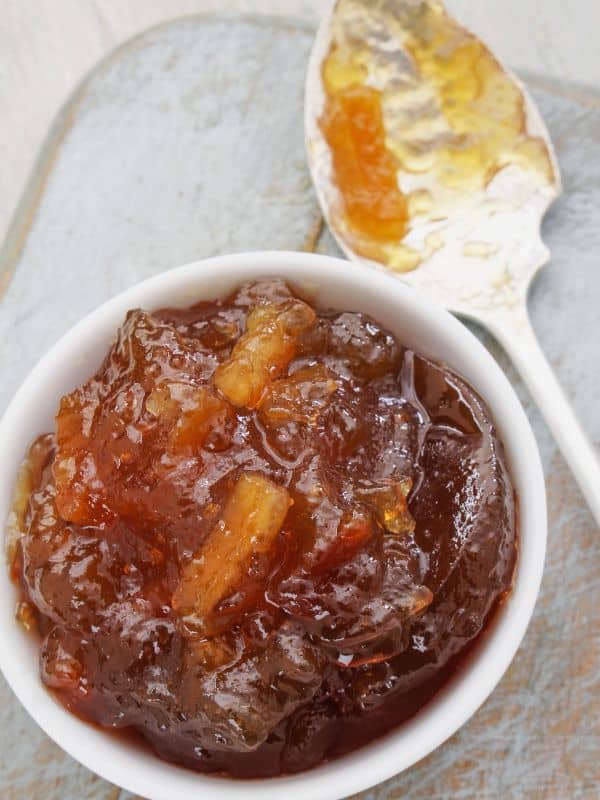
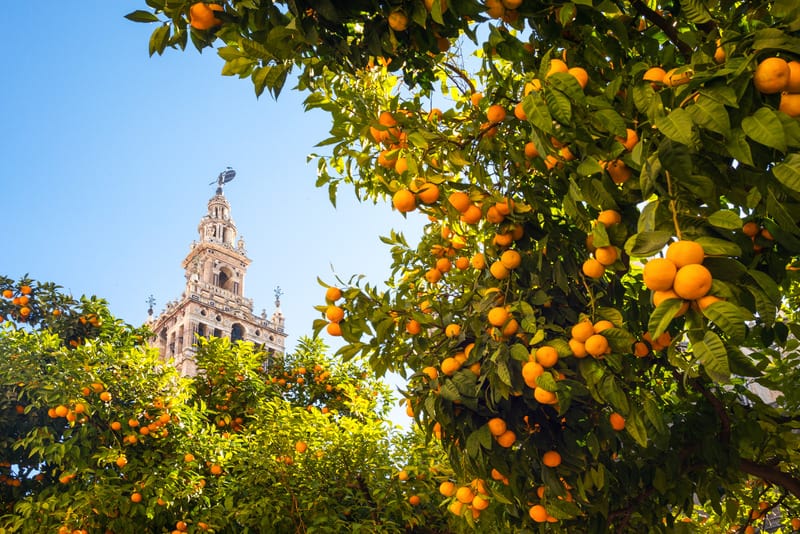
This recipe traces back to the citrus groves of southern Spain, where Seville oranges—known for their intense bitterness and fragrant oils—have been cultivated since at least the 12th century.
By the 18th century, homemade Seville orange marmalade had become a staple in many Andalusian households, especially during winter, when families preserved surplus fruit using slow cooking and sugar.
What began as a practical preservation method evolved into a treasured traditional Andalusian marmalade recipe, enjoyed on toast, paired with cheeses, or even used as a glaze for roasted meats.
Pin for later!
Things You’ll Need for Seville Orange Marmalade
To prepare this Seville orange marmalade, you’ll need sugar, water, cinnamon, pectin, and the main ingredient: Seville oranges.
The only kitchen tool required for this recipe is a food processor or blender to blend the oranges to a puree consistency.
Ingredients
- 1 kg Seville orange (bitter orange)
- 4 cups (800gr) white granulated sugar
- 1/2 teaspoon cinnamon
- 1 cup (240ml) water
- 1 teaspoon pectin
How to Make Seville Orange Marmalade – Step by Step Guide
- To start making this Seville orange marmalade recipe, you have to wash the oranges with plenty of water to remove any dirt, as you’ll also be using the peel. You can use a brush, but do so gently to avoid damaging the peel.
- After that, peel the oranges, removing any of the white pieces that remain on the fruit. Save about half of the peel for later. Remove the seeds.
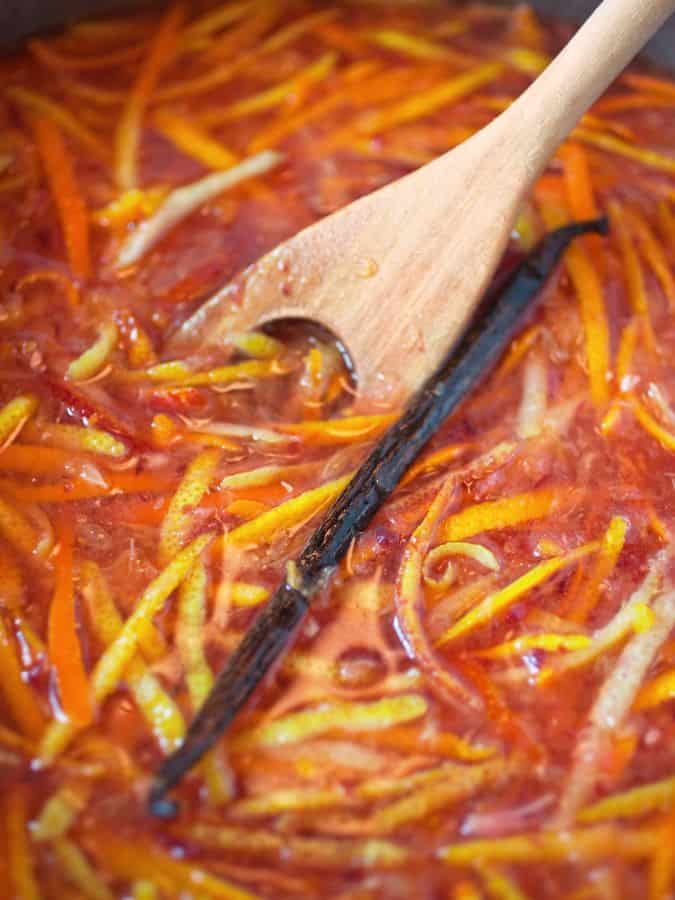
- Now, cut the oranges into cubes. Take the cubes and blend them in a food processor until they get a puree-like consistency. Cut the orange peel into thin julienne-style slices.
- Then, grab a pot and place the orange peel slices, the orange puree, the pectin, the sugar, and the cinnamon along with a cup of water. Cook over medium heat, stirring constantly, for 30 minutes until it begins to thicken and take on a marmalade-like consistency.
- Once your traditional Seville orange marmalade gets a golden color, it’s your sign that it’s ready. If it’s golden but still very runny, then lower the heat and continue mixing for 10 minutes, or until it reaches the desired consistency (it will thicken as it cools as well).
- Now, turn off the heat and let it cool to room temperature in the pot for about 15 minutes. Meanwhile, clean the glass jars where you’ll store the marmalade (you’ll need between 3 and 4 jars).
- Finally, place it in the sterilized jars, cover them, and let the Seville orange marmalade cool completely before storing in the refrigerator. You can store it in the fridge for up to 2 months.
Substitution of Ingredients
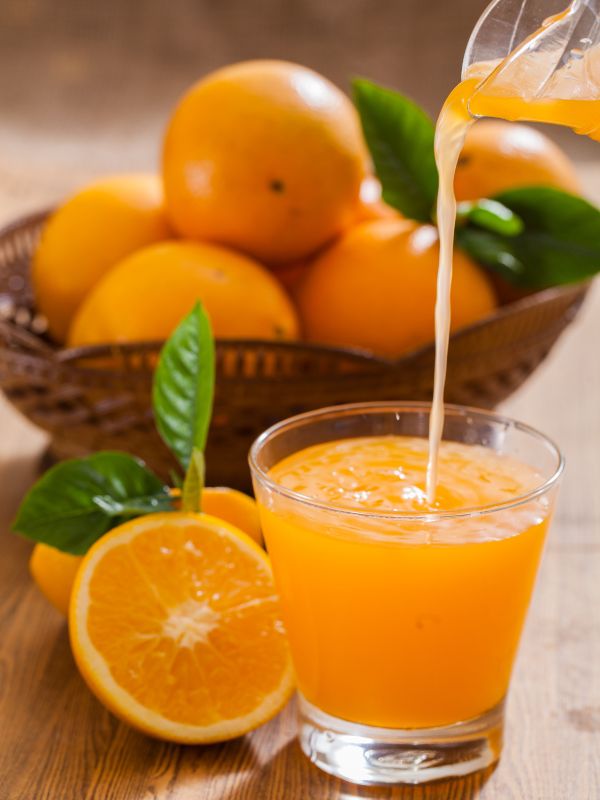
With this recipe, there’s no reason for you to buy Seville orange marmalade, but there are some tweaks you can make to the ingredients to customize it to your tastes.
For example, instead of cinnamon, you can use a couple of cloves, or even a couple of clean mint leaves, although these would have a greater impact on the flavor.
The best Seville orange marmalade is made with authentic Seville oranges, but if you can’t find them in your region, use another type of bitter orange, or regular oranges, adjusting the amount of sugar.
You can also substitute white sugar with brown sugar for a deeper, more caramel-like flavor.
Just note that it might slightly darken the color of the marmalade.
Not tempted by Organic Seville orange marmalade but want to try fruity Andalusian sweets?
Then, feel free to check out our other recipes like the orange flan, the Spanish orange cake, and the apple empanada.
Tips on Serving Seville Orange Marmalade
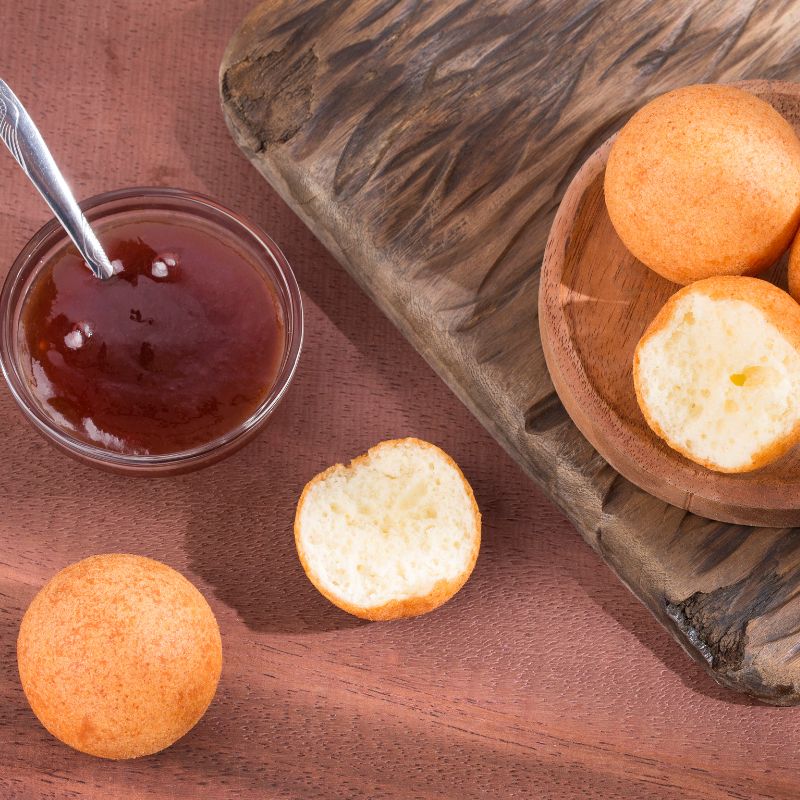
The Seville orange marmalade recipe is ideal for complementing your desserts, elevating your breakfasts, or simply enjoying it as a spoonful every now and then.
You can serve Seville orange marmalade on toast or crackers on its own or with rich cream cheese, and enjoy it for breakfast or as an afternoon snack.
Our favorite way to eat the Seville orange marmalade is with bunuelos de viento, since they are so soft and match perfectly with the jam.
You can also use traditional Spanish orange marmalade as a filling for Spanish sponge cake or Spanish almond cake, along with whipped cream, for the perfect summer dessert.
This marmalade is acclaimed because it spreads better than other typical Spanish spreads like dulce de membrillo, so feel free to experiment with the different dishes you can incorporate it into.
Feeling thirsty while serving or making this Seville orange recipe? Then have an Agua de Valencia ready to cool you down.
How to Store Seville Orange Marmalade
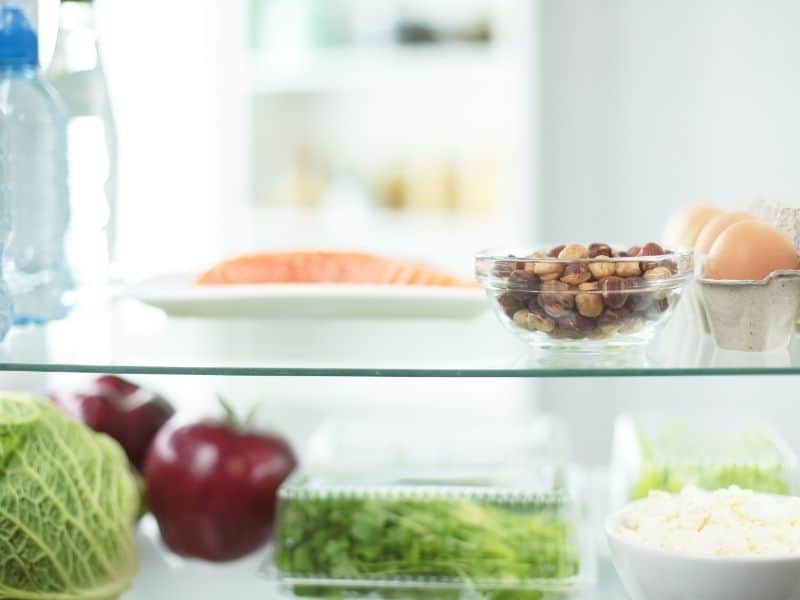
To store your homemade Seville orange marmalade, transfer it while still hot into clean, sterilized glass jars with airtight lids.
Fill each jar nearly to the top, leaving about half an inch of space, and seal immediately to create a vacuum as it cools.
Properly sealed and refrigerated, this traditional Andalusian marmalade recipe can last up to 6 months unopened.
Once opened, store the jar in the fridge and consume within 3 to 4 weeks for best flavor and quality.
Don’t forget: always use a clean, dry spoon when serving your marmalade.
This helps prevent cross-contamination and keeps your preserve fresh and safe to eat for longer.
Recipe Card: Seville Orange Marmalade
Seville Orange Marmalade Recipe
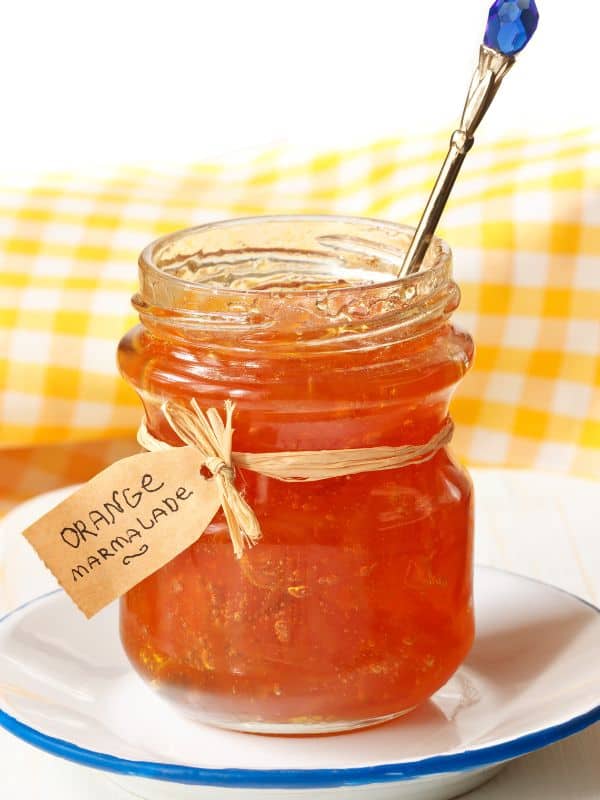
There’s something timeless about the rich, bittersweet flavor of Seville orange marmalade, a preserve that captures the essence of southern Spain in every spoonful.
The orange marmalade is more than just a breakfast staple; it’s a celebration of seasonal citrus, crafted slowly to bring out the natural depth and brightness of Seville oranges, standing out as one of the best Spanish recipes you can find.
Get ready to learn more about the roots of this classic recipe, as well as the step-by-step on how to make homemade Seville orange marmalade, and expert tips to adjust it to your liking.
Ingredients
- 1 kg Seville orange (bitter orange)
- 4 cups (800gr) white granulated sugar
- 1/2 teaspoon cinnamon
- 1 cup (240ml) water
- 1 teaspoon pectin
Instructions
- Wash the oranges with plenty of water to remove any dirt, as you'll also be using the peel. You can use a brush, but do so gently to avoid damaging the peel.
- Peel the oranges, removing any white peel that remains on the fruit. Save about half of the peel for later. Remove the seeds.
- Cut the oranges into cubes. Take the cubes and blend them in a food processor until a puree forms. Cut the orange peel into thin julienne-style slices.
- In a pot, place the orange peel slices, the orange puree, the pectin, the sugar, and the cinnamon along with a cup of water. Cook over medium heat, stirring constantly, for half an hour until it begins to thicken and take on a marmalade-like consistency.
- When it turns golden, it's also a sign that it's ready, even if it's not as thick as you think it should be (as it will thicken further as it cools). If it's golden yet still very runny, then lower the heat and continue mixing for 10 minutes, or until it reaches the desired consistency.
- Turn off the heat and let it cool to room temperature in the pot for about 15 minutes. Meanwhile, clean the glass jars where you'll store the marmalade (you'll need between 3 and 4 jars with this quantity).
- Place it in the sterilized jars, seal them, and let the Seville orange marmalade cool completely before storing in the refrigerator. You can store it in the fridge for up to 2 months.
Notes
Cinnamon doesn't give the Artisan Seville Orange Marmalade a strong flavor; instead, it's used to balance the other flavors present, making it a key addition.
Pectin is a plant-based compound, so you don't have to worry about it. And the best part is, it's the secret to making marmalades cook faster without losing their characteristic texture.
This recipe with Seville oranges could also be made with regular oranges, but you'll want to use a little less sugar, as they tend to be sweeter than this type (you can taste the juice of one before starting to see where it falls on the bitterness scale).
Nutrition Information
Yield
4Serving Size
1Amount Per Serving Calories 136Total Fat 0gSaturated Fat 0gTrans Fat 0gUnsaturated Fat 0gCholesterol 0mgSodium 4mgCarbohydrates 35gFiber 6gSugar 24gProtein 2g
All information presented and written are intended for informational purposes only. You should not rely on this information as a substitute for, nor does it replace, professional medical advice, diagnosis, or treatment. If you have any concerns or questions about your health, you should always consult with a physician or other health-care professional. The writers and publishers of visitsouthernspain.com are not nutritionists or registered dietitians. Statements within this site have not been evaluated or approved by the Food and Drug Administration.

Hola, I’m Paulina! Together with my team, we are passionate about Southern Spain. Here we share all you need to know for great times in Southern Spain with the best places to visit, stay and, of course, the best food to eat.
Let’s dive in and explore Southern Spain’s outdoors, food and culture con pasión!