
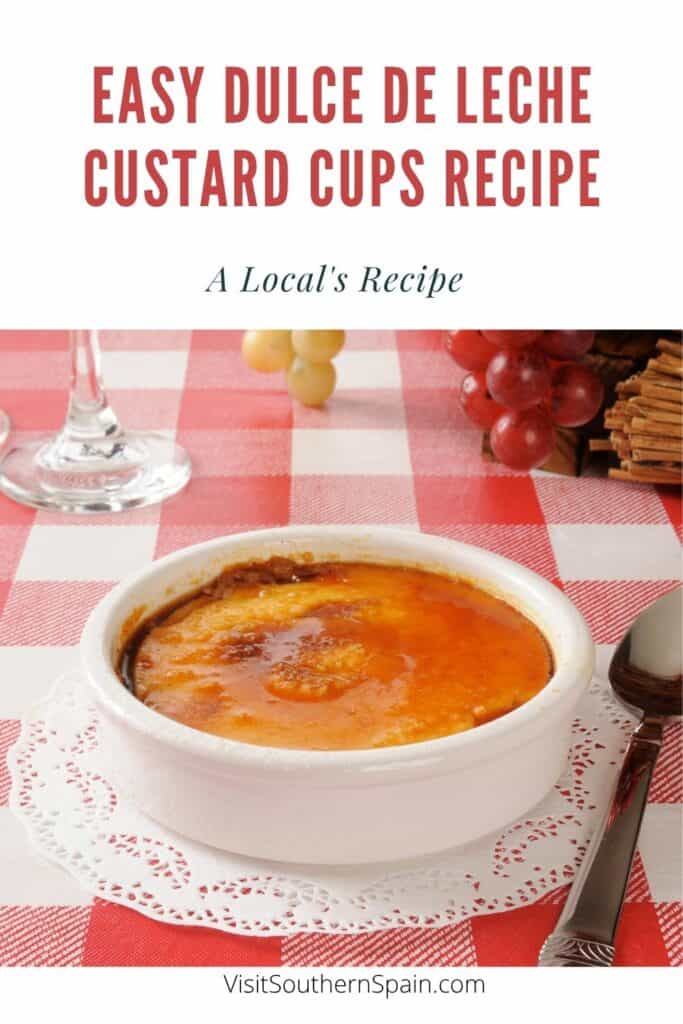
There are classic Spanish desserts that are a great playground for experimenting with new recipes that are simple to make and allow some room for error.
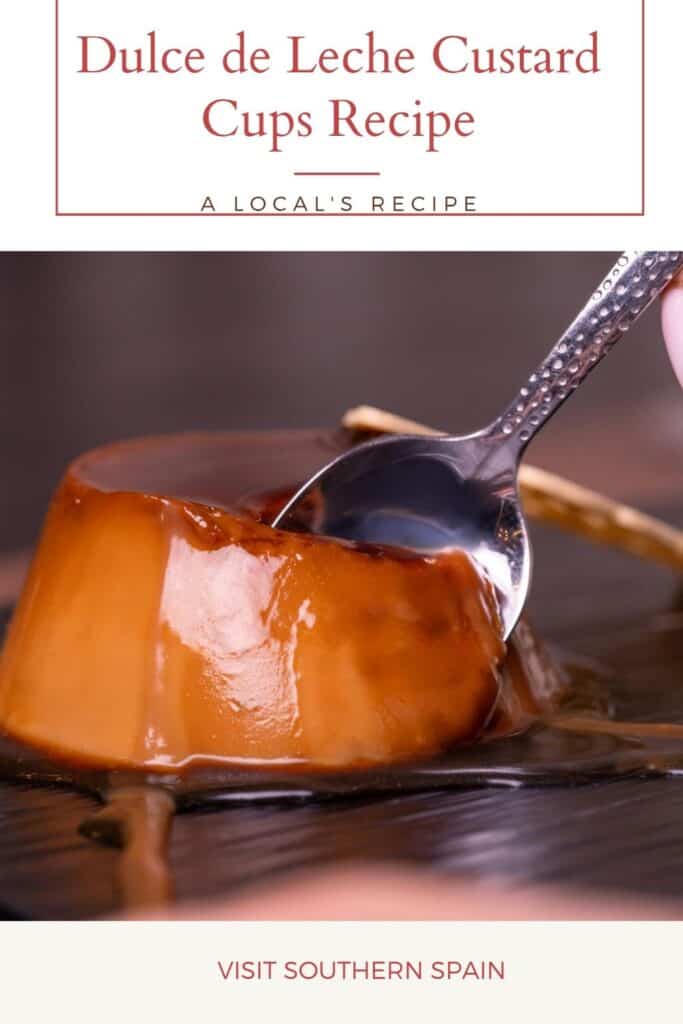
Dulce de leche custard cups are a great example of this: the recipe is simple and does not require spending hours in the kitchen, but the final result is a dessert worthy of being served in the fanciest restaurants in the country.
Continue scrolling down this article, and we will tell you how you can prepare this recipe from scratch, with tips for serving, storing, and adjustments you can make to the ingredients.
You, dear reader, support this blog. If you purchase through a link, we earn a small commission. As an Amazon Affiliate, we earn from qualifying purchases.
Pssst…!!?? You can’t get enough of Spanish dessert recipes? Have a look at my other posts:
Background of the Dish
There is no exact date for the origins of this recipe, but it emerged as a combination between the long European tradition of baked custards and dulce de leche, a beloved ingredient in Latin American cuisine.
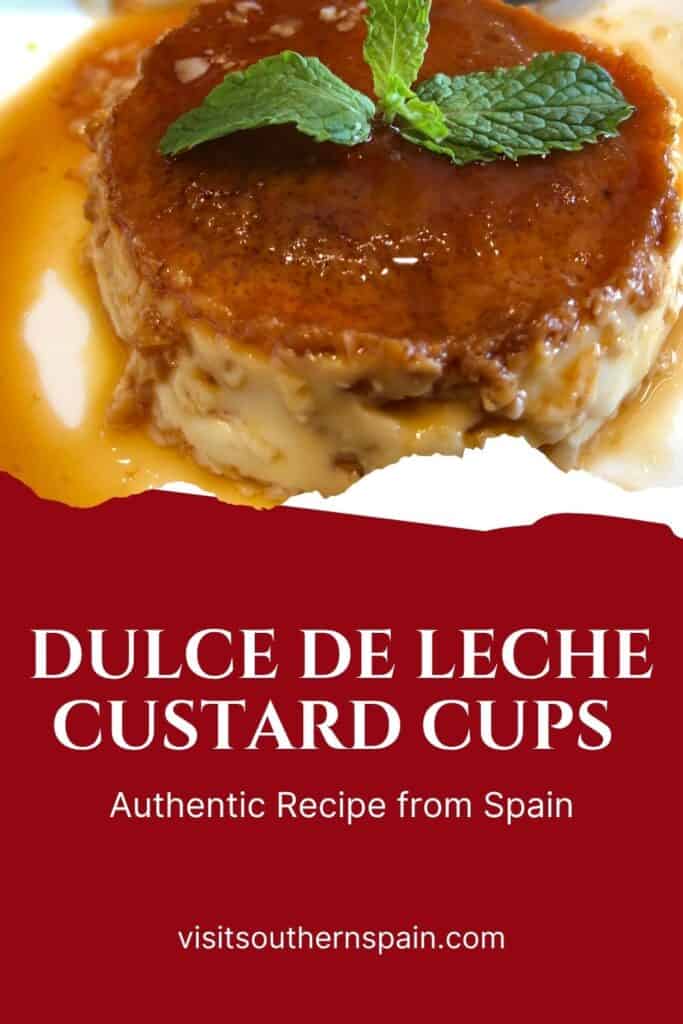
Dulce de leche custard cups also have an innovative format compared to the traditional way of serving custard.
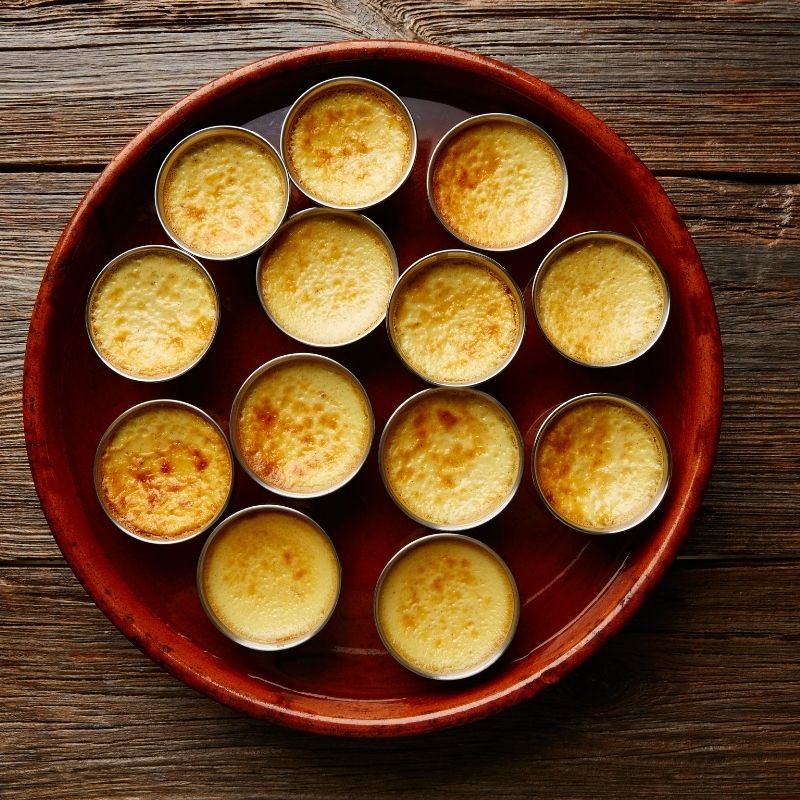
They are not a mini tart or a large custard cake, but ramekin-sized cups that make them ideal for a single serving.
The delicious dulce de leche custard cups can be found in pastry shops and cafes in southern Spain that have South American influences, or you can make them in the comfort of your home without needing to be an expert chef.
Pin for later!

Things You’ll Need for Dulce de Leche Custard Cups
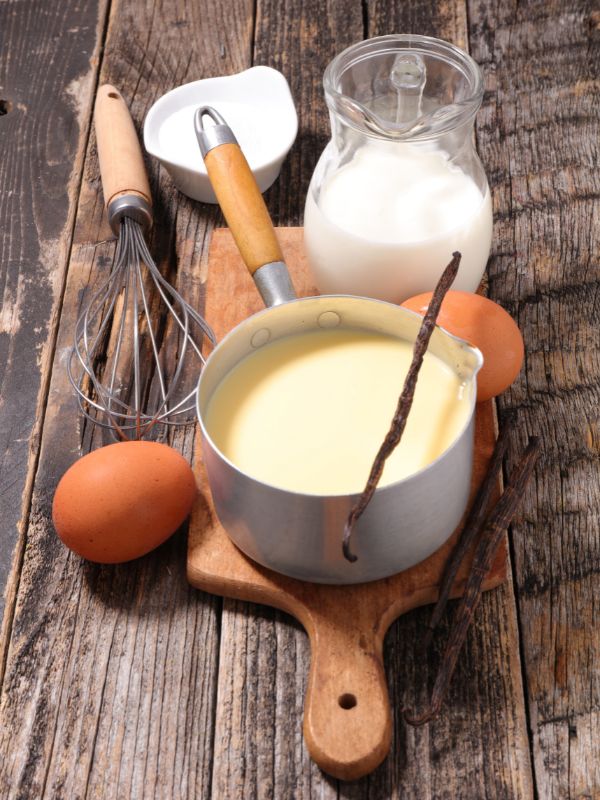
To prepare the easy dulce de leche custard you will need: dulce de leche, whole milk, egg yolks, white sugar, cornstarch, and vanilla extract as the main ingredients.
You will also need six ramekins, or similar containers, for the custard cups.
Ingredients
- 1 cup (300g) Dulce de leche
- 2 cups (480ml) Whole milk
- 4 egg yolks
- 2 tablespoons (25g) White sugar
- 1 teaspoon Vanilla extract
- 1 tablespoon (15g) Cornstarch
- 1 pinch Salt
- Whipped cream for serving (optional)
- Ground cinnamon for serving (optional)
How to Make Dulce de Leche Custard Cups – Step by Step Guide
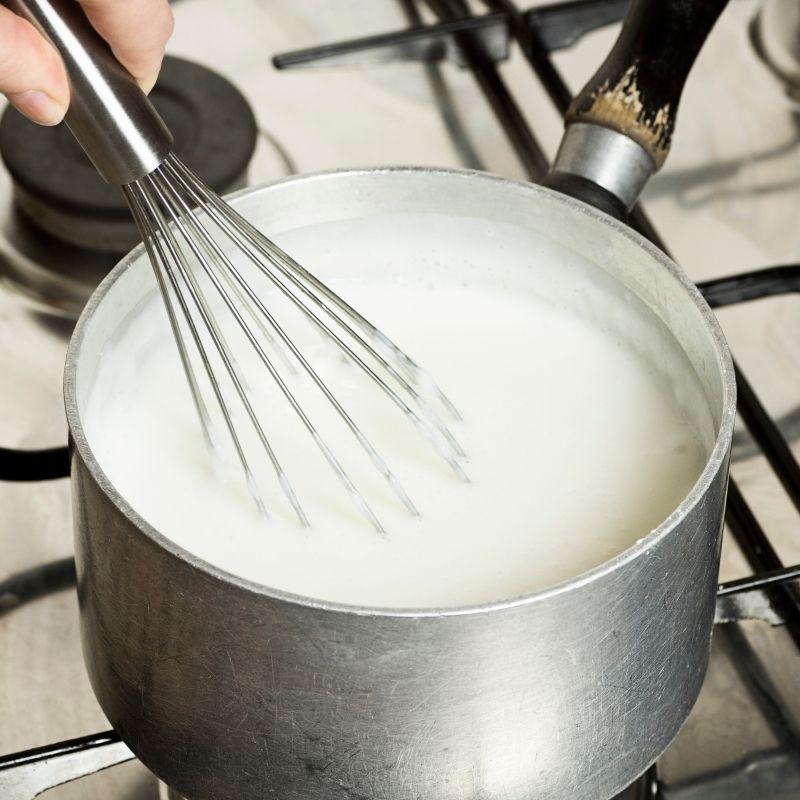
- For the first step in the dulce de leche custard recipe, preheat the oven to 325°F (160°C) and place 6 small oven-safe ramekins in a deep baking dish.
- Now grab a medium saucepan and combine the dulce de leche and milk over low heat. Stir gently until the dulce de leche has completely dissolved and the mixture is smooth. Don’t let it boil.
- In a large bowl, whisk together the egg yolks, sugar, cornstarch, vanilla extract, and salt until smooth and well combined.
- After that, slowly pour the warm milk and dulce de leche mixture into the egg yolks while whisking constantly. This helps prevent the eggs from cooking too quickly.
- For the next step, divide the custard mixture evenly between the prepared ramekins.
- Then, carefully pour hot water into the baking dish around the ramekins until it reaches about halfway up their sides. This water bath will help the custards cook evenly and maintain a smooth texture.
- Now, bake the dulce de leche custard cups for about 30-35 minutes, or until the edges are set but the centers still have a slight jiggle.
- After that time, carefully remove the ramekins from the water bath and allow them to cool at room temperature for about 15 minutes.
- Next, place the dulce de leche custard cups in the fridge for at least 2 hours, or until completely chilled and firm.
- Finally, serve the dulce de leche custard cups cold. Optionally, top them with whipped cream and a light sprinkle of cinnamon.
Substitution of Ingredients
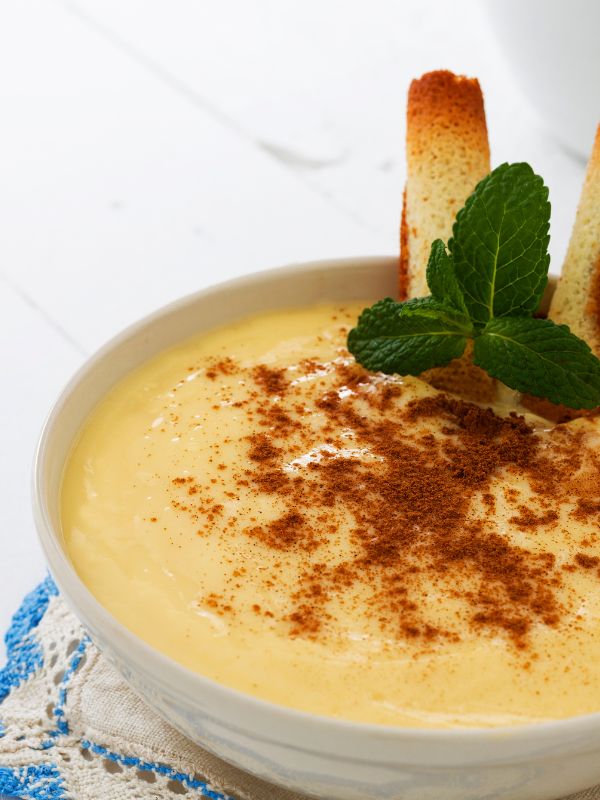
Spanish custard recipes in general require a few main ingredients and some flavoring element (in this case, dulce de leche).
However, you have some room to make changes and adjustments.
For example, you can replace the white sugar with brown sugar, or reduce the total you use by one tablespoon, to lower the added sugar (dulce de leche already makes it quite a sweet dessert).
Additionally, you can replace the cornstarch in this baked dulce de leche custard with one tablespoon of all-purpose flour, or its gluten-free version (in that case, sift it before adding it).
If you want a creamier Spanish custard dessert, replace the whole milk with half and half, or with coconut milk so that it has a tropical flavor that goes well with dulce de leche.
Can’t get enough of authentic Spanish desserts with dulce de leche?
Then try other classics like dulce de leche palmiers, dulce de leche tart, and dulce de leche brownies.
Tips on Serving Dulce de Leche Custard Cups
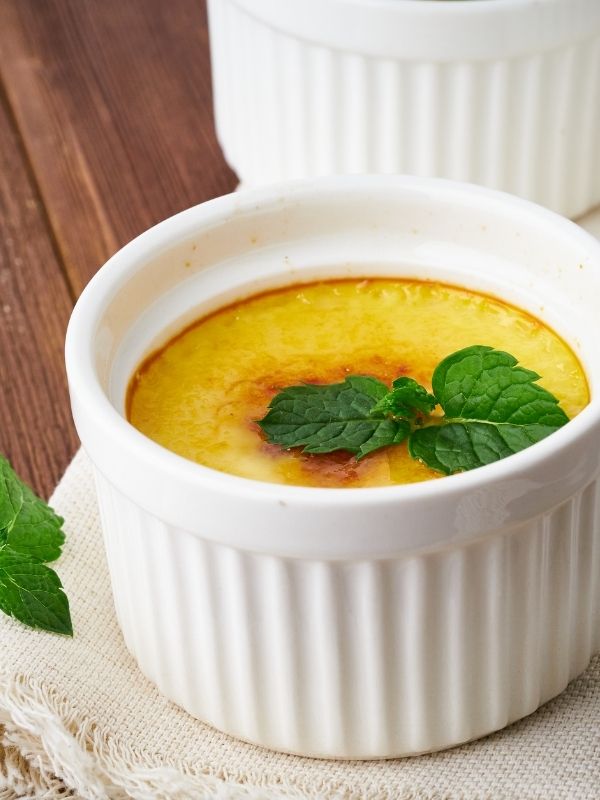
Something we love about this recipe is that when you finish, you have individual dulce de leche desserts, so you don’t even have to cut them into portions when serving.
Still, you can play with toppings to give them another style.
Just like with dulce de leche flan and dulce de leche crepes, a good way to add texture is to top it with chopped and toasted nuts, almonds, or hazelnuts.
You can also use salted caramel brittle.
Adding a pinch of sea salt on top of the dulce de leche custard cups can also help achieve that mix between salty and sweet, although you can go the traditional route and simply pair it with whipped cream.
Like other traditional Spanish sweets, it is best served with a bitter drink to avoid overwhelming the palate with sweetness.
Black coffee, coffee with milk, or tea work wonderfully.
If you have guests coming over, surprise them with a spread of Andalusian sweets, including other classics such as dulce de leche cheesecake, tarta San Marcos, and Spanish apple cake.
How to Store Dulce de Leche Custard Cups
When you finish preparing the delicious dulce de leche custard cups, you can let them come to room temperature and store them for later.
To do so, place the Spanish custard cups in an airtight container or cover each ramekin with plastic wrap so they do not absorb the odors from the refrigerator.
Then, store them for up to 4 days in the refrigerator, and when you are ready to serve them, you can do so right away from the fridge.
As it is such a creamy dessert, it cannot be stored in the freezer because this would affect its consistency, making it watery or grainy after thawing.
Fortunately, we have other easy Spanish dessert recipes for you if you are looking for recipes that can be frozen, such as Spanish orange cake, dulce de leche cupcakes, and Dulce de leche filled sponge cake.
Recipe Card: Dulce de Leche Custard Cups
Dulce de Leche Custard Cups Recipe
There are classic Spanish desserts that are a great playground for experimenting with new recipes that are simple to make and allow some room for error.
Dulce de leche custard cups are a great example of this: the recipe is simple and does not require spending hours in the kitchen, but the final result is a dessert worthy of being served in the fanciest restaurants in the country.
Continue scrolling down this article, and we will tell you how you can prepare this recipe from scratch, with tips for serving, storing, and adjustments you can make to the ingredients.
Ingredients
- 1 cup (300g) Dulce de leche
- 2 cups (480ml) Whole milk
- 4 egg yolks
- 2 tablespoons (25g) White sugar
- 1 teaspoon Vanilla extract
- 1 tablespoon (15g) Cornstarch
- 1 pinch Salt
- Whipped cream for serving (optional)
- Ground cinnamon for serving (optional)
Instructions
- To start preparing the dulce de leche custard cups, preheat the oven to 325°F (160°C) and place 6 small oven-safe ramekins in a deep baking dish.
- In a medium saucepan, combine the dulce de leche and milk over low heat. Stir gently until the dulce de leche has completely dissolved and the mixture is smooth. Do not let it boil.
- In a large bowl, whisk together the egg yolks, sugar, cornstarch, vanilla extract, and salt until smooth and well combined.
- Slowly pour the warm milk and dulce de leche mixture into the egg yolks while whisking constantly. This helps prevent the eggs from cooking too quickly.
- Divide the custard mixture evenly between the prepared ramekins.
- Carefully pour hot water into the baking dish around the ramekins until it reaches about halfway up their sides. This water bath will help the custards cook evenly and maintain a smooth texture.
- Bake the dulce de leche custard cups for about 30-35 minutes, or until the edges are set but the centers still have a slight jiggle.
- Carefully remove the ramekins from the water bath and allow them to cool at room temperature for about 15 minutes.
- Refrigerate the custard cups for at least 2 hours, or until completely chilled and firm.
- Serve the dulce de leche custard cups cold. Optionally, top them with whipped cream and a light sprinkle of cinnamon for an even more delicious finish.
Notes
Cinnamon and dulce de leche might not be the most common combination, but sprinkle cinnamon powder on top of the creamy dulce de leche custard is a great way to add a touch of spice.
Cooling time is key for Spanish dulce de leche custard because otherwise it will not set completely, and will lose its characteristic shape and texture.
Nutrition Information
Yield
6Serving Size
1Amount Per Serving Calories 247Total Fat 9gSaturated Fat 5gUnsaturated Fat 4gCholesterol 144mgSodium 190mgCarbohydrates 34gFiber 0gSugar 30gProtein 7g
All information presented and written are intended for informational purposes only. You should not rely on this information as a substitute for, nor does it replace, professional medical advice, diagnosis, or treatment. If you have any concerns or questions about your health, you should always consult with a physician or other health-care professional. The writers and publishers of visitsouthernspain.com are not nutritionists or registered dietitians. Statements within this site have not been evaluated or approved by the Food and Drug Administration.

Hola, I’m Paulina! Together with my team, we are passionate about Southern Spain. Here we share all you need to know for great times in Southern Spain with the best places to visit, stay and, of course, the best food to eat.
Let’s dive in and explore Southern Spain’s outdoors, food and culture con pasión!