

A guide to help you learn Spanish for travel
The best way to make the most of your trip in Spain is to learn Spanish for travel. Especially if you are going to southern Spain, you’ll run into locals.
Learning how to speak Spanish for your travels will not only help you get directions or order something, but will also help you appreciate and understand your destination’s norms and culture.
If you are planning a holiday, even a short-term course of Spanish learning will greatly improve your confidence when speaking to locals.
You don’t need to be fluent in Spanish to enjoy Spain.
Once you are immersed in the Spanish culture, you’ll just find yourself speaking with the locals with words you’ve acquired from them or learned from a tutor.
You, dear reader, support this blog. If you purchase through a link, we earn a small commission. As an Amazon Affiliate, we earn from qualifying purchases.
Pssst…!!?? You can’t get enough of Southern Spain? Have a look at my other posts:
Overview: Our most used Spanish phrases for travel
- Hola, Adiós
- Buenos días
- Gracias
- Dónde está? and ¿Habla inglés?
1. Why Learn Spanish Before Traveling to Spain?
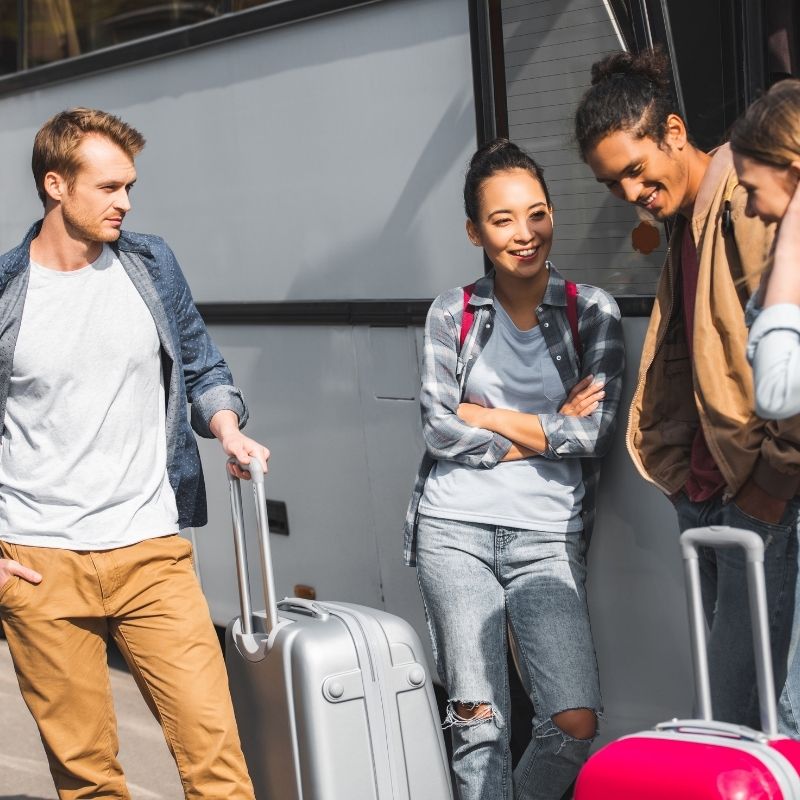
For a more rewarding trip to Spain, it will be nice for you to learn Spanish for travel.
Every restaurant you’ll dine in and market you’ll visit has Spanish-speaking staff.
Instead of knowing the menu, knowing how to ask could save you time.
If you call a cab, more than likely you could speak some Spanish with your taxi driver.
If you know Spanish, you would not have to worry about being stuck in traffic and not having a way to get home if you don’t know how to ask the cab driver how much it will cost you.
Speaking Spanish for tourists like the locals do will enable you to ask for directions and know directions.
You could also get into an emergency while traveling, whether it be getting hurt or having your passport stolen and getting pickpocketed.
Knowing a little bit of basic Spanish for travel is essential so you can get through those “unexpected” scenarios you may get into.
2. Essential Spanish Phrases for Travelers
Greetings & politeness
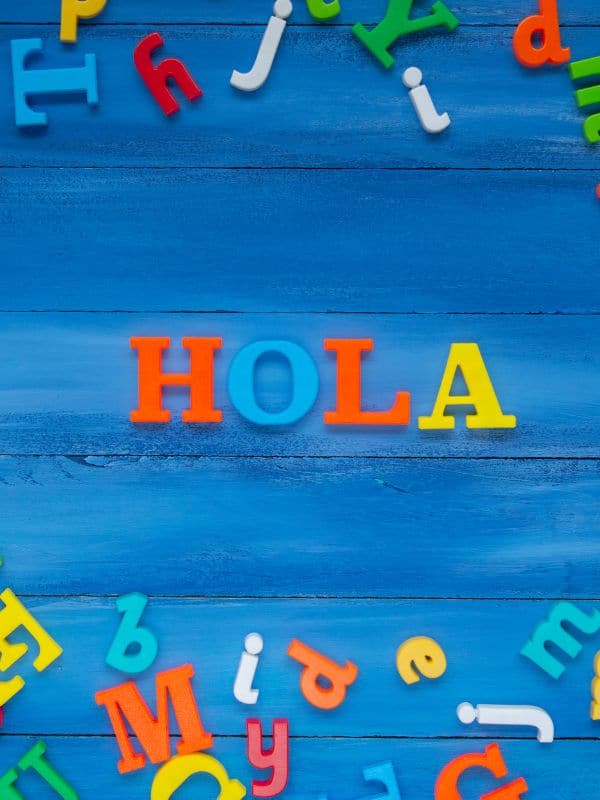
These basic greetings show respect to locals. With a simple Gracias (Thank you), you can go a long way.
- Hola / Adiós: A way to greet someone: “Hello” and say “Goodbye”.
- Buenos días: Another generic greeting used to say “Good Morning”
- Por favor: Saying “Please” when ordering food, conveying a request, or asking for help.
- Gracias: If you want to express your appreciation, this is how you say “Thank You”.
- Perdón: A brief “Sorry” for not being able to understand what the other person is saying.
- Hasta luego: This is a polite way of saying “See you later”.
Getting around
These Spanish phrases for travel can help you get around.
- ¿Dónde está…?: If you get lost, this is how you ask for directions. For instance, ¿Dónde está el baño? (Where is the bathroom?).
- ¿Cómo llego a…?: Another alternative for asking the location. Say, for example, ¿Cómo llego al parque? (How do I get to the park?)
- ¿Cuánto cuesta?: When shopping at the market or ordering food, this is how you say “How much does it cost?”
- ¿Está lejos?: A standard phrase used to ask “Is it far?” in Spanish.
Restaurants
If you dine in at tapas bars and restaurants, use these questions as you learn Spanish for travel.
- Una mesa para dos, por favor.: This is a friendly way to say “A table for two, please” if you have a companion upon entering the restaurant.
- ¿Qué me recomienda?: If you can’t decide which food to order from the menu, you can ask the waiter, “What would you like to recommend to me?”
- La cuenta, por favor.: When you finish your food, you can say this to ask, “The bill, please”.
- ¿Puedo pagar con tarjeta?: When the server hands you the bill and you don’t have cash, you can simply ask, “Can I pay by card?”.
When you need help
For simple assistance, you can ask the following phrases.
- ¿Habla inglés?: When speaking to a native, you can let them know you aren’t fluent in Spanish by asking them if they speak English.
- No entiendo.: If it still doesn’t make any sense, you can simply let them know you can’t understand.
- ¿Puede repetir?: This phrase translates to “Can you repeat that?” if you want to clarify something.
- ¿Puede ayudarme?: If you need a hand, don’t be shy to ask this phrase that means “Can you help me?”.
3. Spanish You’ll Hear in Southern Spain
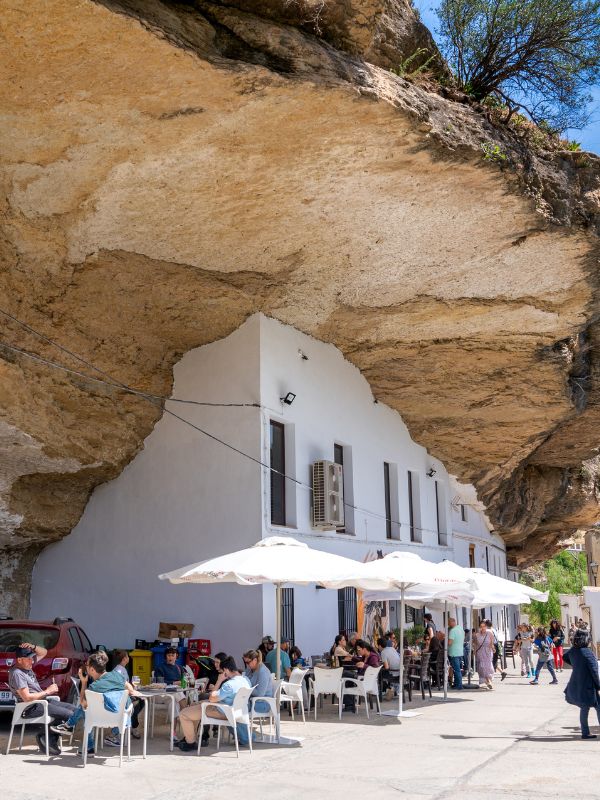
If you’re planning to visit Southern Spain, you can learn Spanish for travel and talk to the locals.
Spanish for Andalusia can sound different from textbook Spanish.
Accents vary throughout the provinces in Andalucia.
Some words and expressions are more common in this region.
The locals tend to skip certain letters like S. In seseo, for example, they say the same word for S/C/Z, but with a th sound. Like asco sounds like ahco.
In Spanish, for Southern Spain, they also use slang terms not heard elsewhere like in Madrid or Bilbao.
Here are some examples that you can add to your Spanish vocabulary for travel:
Noniná: Contraction of “no ni nada”. Means “absolutely” or “of course”.
Pechá: Used to describe a massive amount of something.
Malaje: Describes an unpleasant, dry, or grumpy person.
Coraje: Refers to anger or intense frustration.
Al liquidá: Expresses that something is completely finished or broken.
Perita: Used in Malaga to describe something cool or excellent.
Some Spanish expressions that are uniquely Andalusian/Seville:
Vale: It means you understand. Practically saying “Okay”, “Sounds good”, or “Alright”.
Venga: Wraps up the conversation with “Come on” or “Alright then”.
Pues: A filler word that conveys “Well”, “Then”, “So”, or “Because”
Miarma: Functions as a term of endearment, similar to saying “My dear”, “Sweetheart”, or “My love”.
Want to learn Spanish for travel? Our Speak Like a Local guides explore the expressions and pronunciation you’ll hear in destinations across Southern Spain.
4. How to Practice Spanish Before Your Trip

Before going on a trip to Spain, it is a good idea to learn Spanish for travel so that you can communicate with the locals.
Furthermore, by making the effort to speak it, the experience will become more enriching.
However, before learning Spanish for travel, it is important to distinguish between knowing Spanish phrases and being able to actively speak the language.
Translating is not the same thing as directly applying the linguistic code to one’s daily life.
Therefore, if someone learns only Spanish phrases for Spain, they will not engage in the real process of building connections and holding conversations.
Travelers can prepare through:
- apps like Preply
- podcasts
- Spanish TV
- reading
- speaking practice
If your goal is to be comfortable speaking Spanish on your trip, practicing with a tutor is often one of the best ways to do that.
Preply can help you connect with a Spanish tutor online, and allows you to focus on what you need to learn.
Practicing conversation in Spanish for travelers can be extremely important before you go.
Are you trying to learn how to practice Spanish before traveling? That’s easy peasy. Here’s how you can practice:
- Ordering tapas: Buenas noches, una tortilla, por favor.
- Checking into a hotel: Hola, buenas tardes. Tengo una reserva a nombre de [Last Name].
- Asking for directions: Disculpe, ¿sabe si hay una farmacia por aquí cerca?
- Making small talk: ¡Qué calor hace hoy! ¿Siempre es así en agosto? (How hot it is today! Is it always like this in August?)
- Pronunciation: Practice saying todo (toh-thoh) and pescado (pes-cah-thoh). The Spanish D at the end of todo is pronounced like the English th in this word
- Knowing how to understand spoken words: In Spanish, the language is often run together compared to English. For example: ¿Qué haces? sounds like ¿Quaces?; Los ojos sounds like Lozojos.
Ready to practice Spanish before your trip?
Find a Spanish tutor on Preply and practice the conversations you’re likely to have while traveling in Spain.
And as a bonus, you get 70% off your first lesson. We believe that’s worth a try! – Check out Preply here.
5. Helpful Tips for your Spanish Travel Plan

Create a simple guide on Spanish for traveling in Spain.
This will include greetings and common expressions for making purchases.
Day 1-4: Learn the basics
Learn Spanish for travel using simple greetings and expressions in Spanish, including numbers, please, thank you, questions such as ” Where is…?” and ” How much is it?”.
Day 5-8: Learn common expressions for everyday situations
Practice ordering food, asking for directions, describing things, buying tickets and registering, paying bills, and shopping.
Day 9-12: Listening and speaking skills
Listen and repeat after simple conversations in Spanish for about 15 to 30 minutes per day. Practice also answering questions commonly asked by travelers in Spain.
Day 13-14: Act out conversations
You can try ordering at a restaurant, registering at a hotel, asking for directions, and other travel-related conversations.
This is a good opportunity to work with a tutor to practice and learn how to say these expressions out loud and respond when being asked in Spanish. – Practice on Preply here
6. Botom Line on learning Spanish
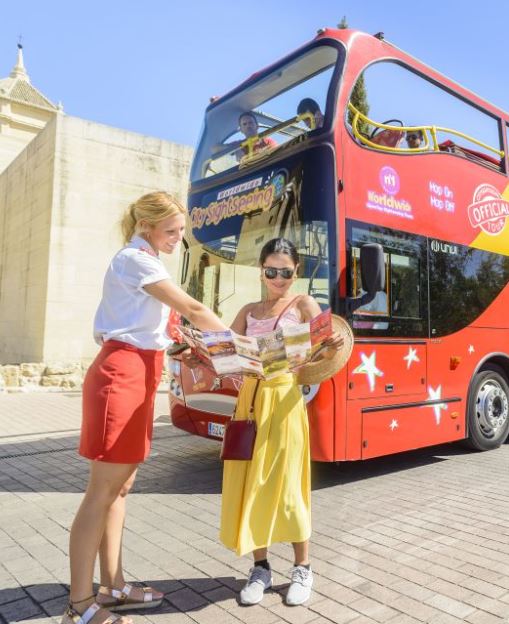
If you want to make the most of your trip to Andalusia, it’s time to learn Spanish for travel.
You do not need to be bilingual to experience Spain, but learning the basics will make you feel more confident and give you a sense of belonging to the place you are visiting.
To prepare for your Spanish holiday, practice Spanish for visiting Spain, which not only will broaden your vocabulary but also will assist you in communicating with local people and service providers (tour guides, taxi drivers, waiters, and sellers).
More importantly, experiencing a foreign country through its language is the best way to create and collect core memories for the future.
Ready to practice Spanish before your trip? Check out Preply and their insane 70%-off offer for the first lesson. – Practice on Preply here
Short FAQ about learning Spanish
Do I need to speak Spanish to travel around Spain?
No, you don’t need Spanish to travel around Spain.
Some people speak English, but it is ideal to learn some basic phrases to be able to get by.
How much Spanish should I learn before visiting Spain?
Learning basic or everyday common Spanish expressions is enough to help you get by and enjoy your visit to Spain.
What are the most useful Spanish phrases for tourists?
The most important Spanish phrases for tourists are basic greetings like Hola, Adiós, Buenos días, and Gracias and asking some basic questions such as ¿Dónde está? and ¿Habla inglés?

Hola, I’m Paulina! Together with my team, we are passionate about Southern Spain. Here we share all you need to know for great times in Southern Spain with the best places to visit, stay and, of course, the best food to eat.
Let’s dive in and explore Southern Spain’s outdoors, food and culture con pasión!