
Savory Spanish recipes, such as tortilla de patata or paella, usually get all the attention, but desserts can also offer real culinary gems.
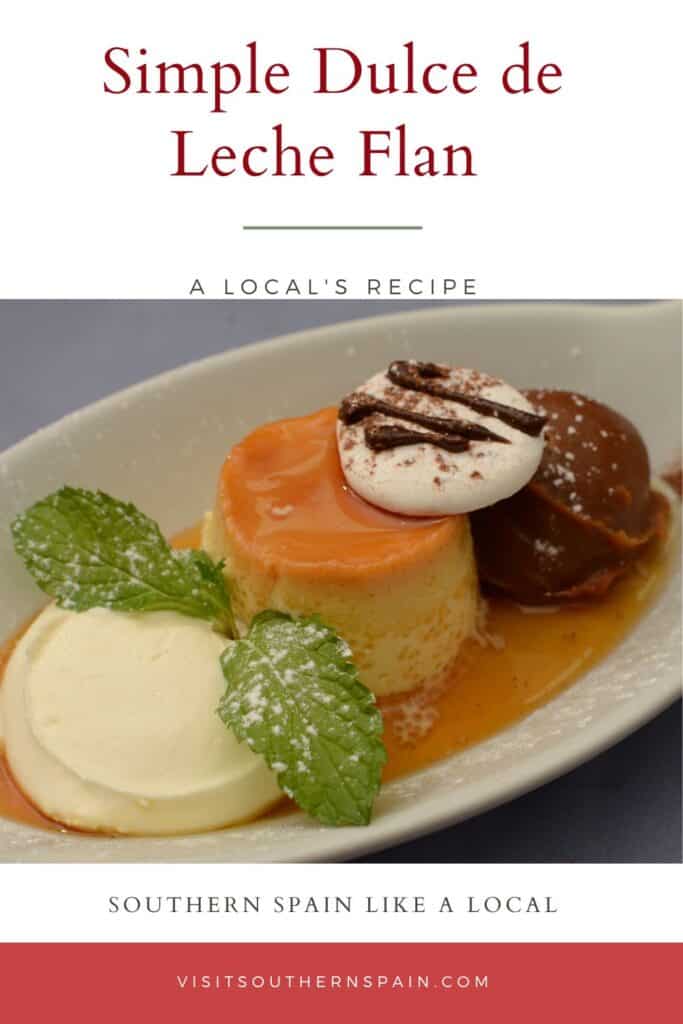
This dulce de leche flan for special occasions is a perfect example: it builds on a traditional custard base.
It elevates it with the deep, creamy sweetness of dulce de leche, creating Spanish desserts that feel both familiar and indulgent.
In this article, you’ll discover how to make dulce de leche flan step by step, along with helpful tips for adjusting the ingredients, storing it properly, and serving it in a way that makes it shine.
You, dear reader, support this blog. If you purchase through a link, we earn a small commission. As an Amazon Affiliate, we earn from qualifying purchases.
Pssst…!!?? You can’t get enough of Spanish desserts? Have a look at my other posts:
Background of the Dish
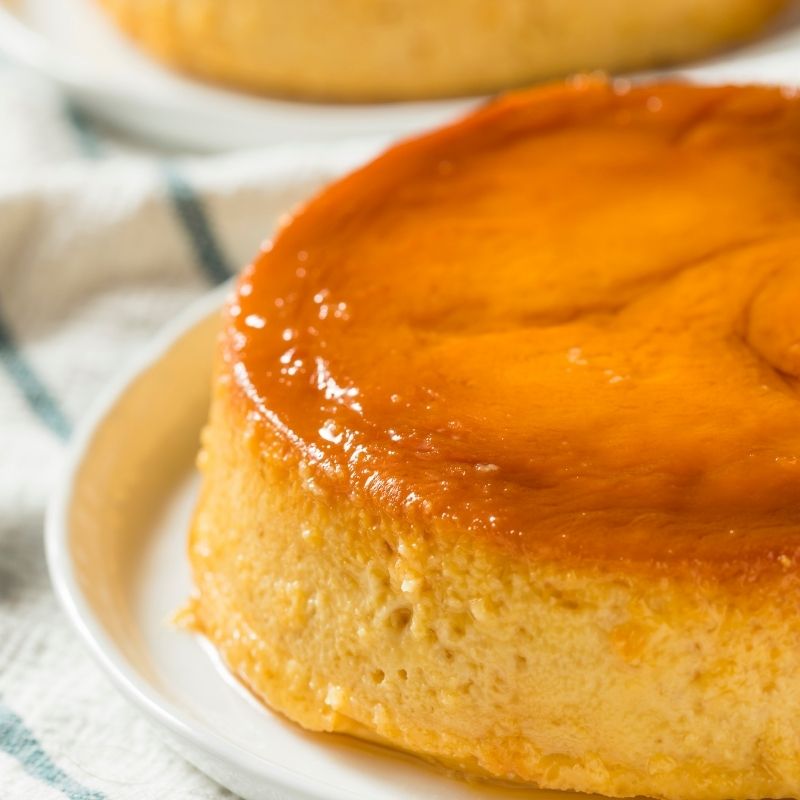
The original flan recipe was created in Europe during the Middle Ages, where eggs and milk were combined and gently cooked to create a simple custard.
While the traditional flavor only had a vanilla flavor, the recipe from this article incorporates a traditional ingredient from South America: the dulce de leche.
It isn’t the first time dulce de leche made its way to Andalusian recipes.
Another beloved sweet includes the dulce de leche churros, though the flan is a smoother and creamier dessert with a more delicate texture.
Pin for later!
Things You’ll Need for Dulce de Leche Flan
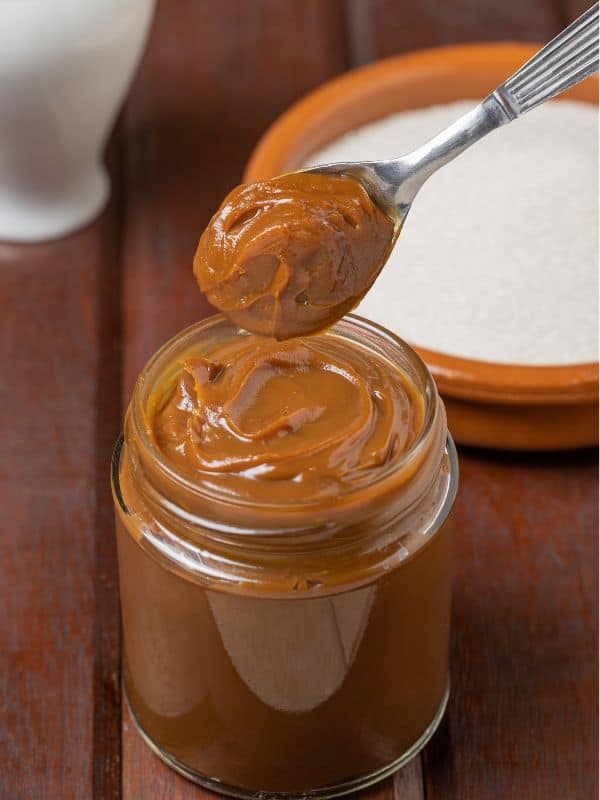
To prepare dulce de leche flan, you will need eggs, whole milk, sugar, vanilla extract, and dulce de leche.
The only equipment you need to make this creamy dulce de leche flan step by step is bowls.
Ingredients
- 1 cup (250 g) dulce de leche
- 1 cup (200 g) sugar (for caramel)
- 4 large eggs
- 2 cups (500 ml) whole milk
- 1 teaspoon vanilla extract
How to Make Dulce de Leche Flan – Step by Step Guide
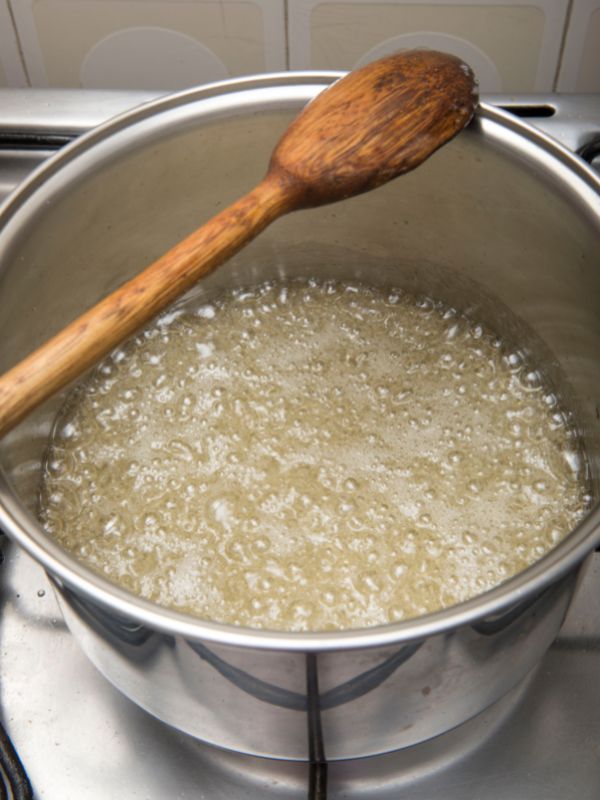
- To start with this baked dulce de leche flan recipe, place the sugar in a saucepan over medium heat. Let it melt without stirring until it turns into a golden caramel. Carefully pour the caramel into a flan mold or baking dish, tilting it to coat the bottom evenly. Set aside to cool and harden.
- Now, grab a bowl and whisk the eggs until smooth. Add the dulce de leche and mix well until fully combined. Pour in the milk and vanilla extract, and whisk until you get a uniform mixture.
- Through a sieve, strain the mixture to remove any lumps, and you will get a smoother texture. Then pour it into the caramel-lined mold.
- Then, place the mold inside a larger baking dish and fill the outer dish with hot water, creating a water bath (baño María). The water should reach about halfway up the sides of the mold.
- As a key step, bake the flan in a preheated oven at 160°C (320°F) for about 60 minutes, or until the flan is set but still slightly jiggly in the center.
- After that, remove the Latin dulce de leche flan from the oven and let it cool to room temperature. Then take it to the fridge and let it cool for at least 4 hours, or until fully chilled.
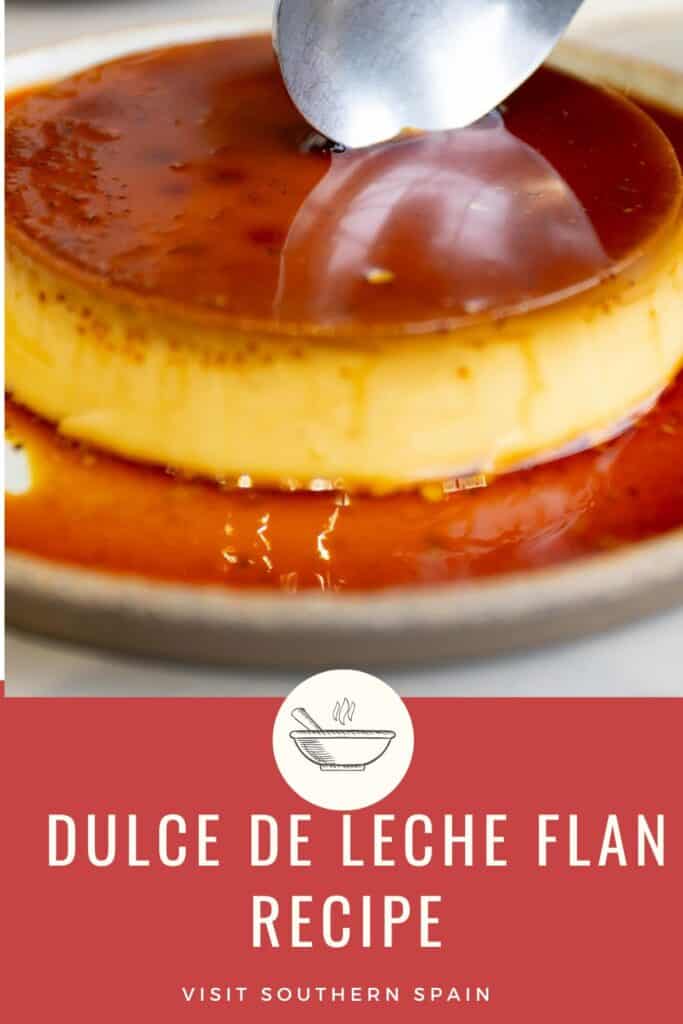
- Finally, run a knife around the edges and carefully invert the flan onto a plate. The caramel will flow over the top, creating the perfect topping for this rich caramel dulce de leche custard dessert.
Substitution of Ingredients
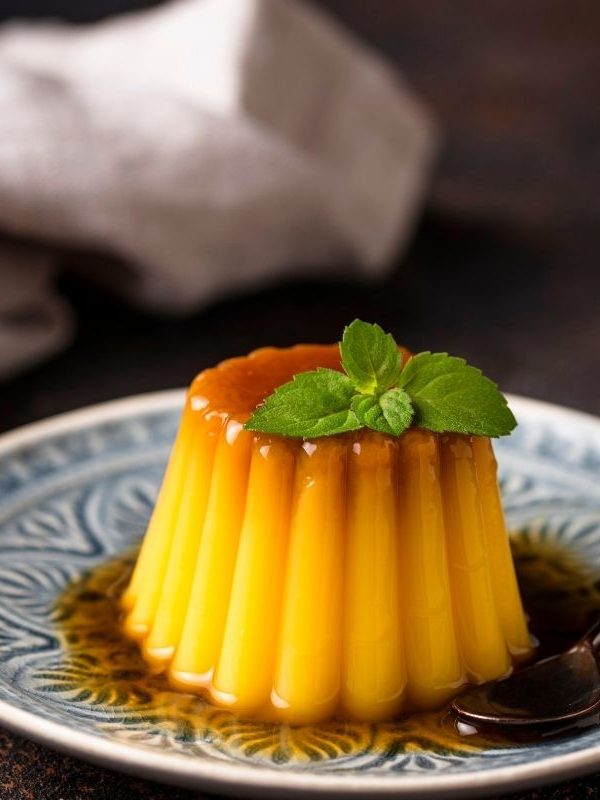
This is truly the best dulce de leche flan recipe, because it only calls for 5 ingredients that almost everyone has at home, and still, there are some adjustments you can make.
For example, if you can’t find dulce de leche at your local store, then you can easily make it by slowly heating a can of condensed milk until it caramelizes.
You can also swap the whole milk for evaporated milk or a mix of milk and cream for a richer, silky caramel flan with dulce de leche
Ready to explore more Spanish flan recipes?
Then, you must take a look at our pumpkin spice flan cake, orange flan, and chocoflan recipe.
Tips on Serving Dulce de Leche Flan
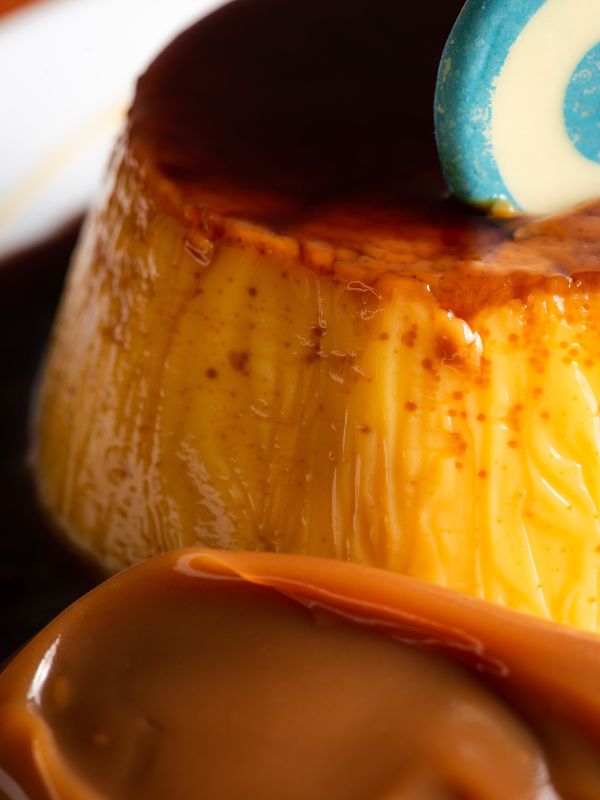
Once you finish chilling this traditional flan with dulce de leche, you will have the perfect dessert ready to serve.
Most people serve it as is, but you can elevate it by topping it with whipped cream or a spoonful of dulce de leche for an extra sweet and decadent dessert.
To level the sweetness of the creamy dulce de leche custard, serve it with a cup of hot black coffee, a latte (with no sugar), or black tea.
To play with the textures, top the dulce de leche flan with toasted and chopped almonds and nuts or shredded coconut, as they pair really well.
If this recipe woke your sweet tooth up, then we have more desserts from Andalusia for you.
Explore our recipes for dulce de leche cupcakes, tarta de limon, and orange crema catalana.
How to Store Dulce de Leche Flan
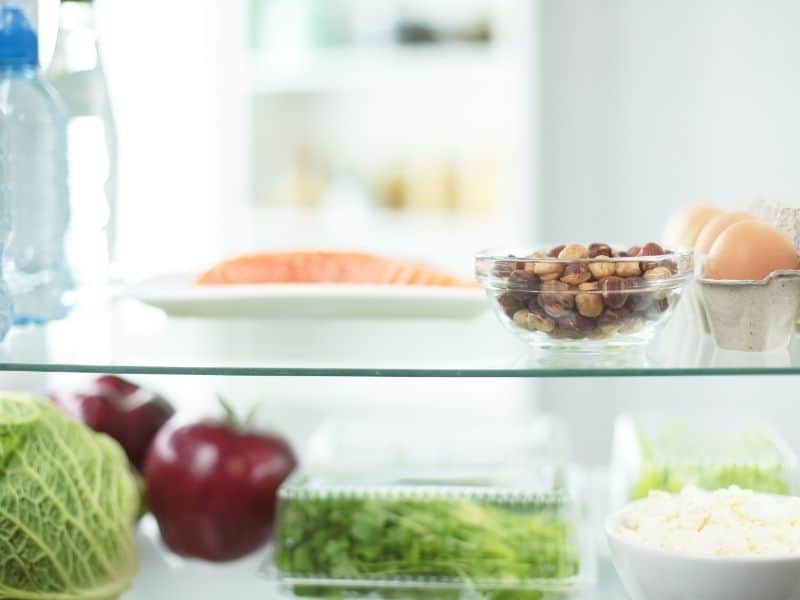
Since this dulce de leche pudding dessert contains dairy and eggs, you have to be careful while storing it so that it keeps its smooth and creamy texture.
First, you have to let it come to room temperature, then cover it tightly with plastic wrap or transfer it to an airtight container to prevent it from absorbing odors from the fridge.
Then, you can store the dulce de leche flan in the refrigerator for up to 4 days. For best results, keep it in its mold with the caramel until serving, as this helps preserve its moisture and flavor.
Keep in mind that dulce de leche flan should not be frozen, as it can affect its delicate texture and cause it to become watery once thawed.
Some desserts that can be stored for longer or even frozen are Spanish orange cake or dulce de leche cheesecake, which are more stable options for ahead-of-time preparation.
Recipe Card: Dulce de Leche Flan
Dulce de Leche Flan Recipe
Savory Spanish recipes, such as tortilla de patata or paella, usually get all the attention, but in desserts we can find some real culinary gems.
This dulce de leche flan for special occasions is a perfect example: it builds on a traditional custard base and elevates it with the deep, creamy sweetness of dulce de leche, creating a dessert that feels both familiar and indulgent.
In this article, you’ll discover how to make dulce de leche flan step by step, along with helpful tips for adjusting the ingredients, storing it properly, and serving it in a way that makes it shine.
Ingredients
- 1 cup (250 g) dulce de leche
- 1 cup (200 g) sugar (for caramel)
- 4 large eggs
- 2 cups (500 ml) whole milk
- 1 teaspoon vanilla extract
Instructions
- First, place the sugar in a saucepan over medium heat. Let it melt without stirring until it turns into a golden caramel. Carefully pour the caramel into a flan mold or baking dish, tilting it to coat the bottom evenly. Set aside to cool and harden.
- In a bowl, whisk the eggs until smooth. Add the dulce de leche and mix well until fully combined. Pour in the milk and vanilla extract, and whisk until you get a uniform mixture.
- Strain the mixture through a sieve to remove any lumps until you get a smoother texture. Then pour it into the caramel-lined mold.
- Place the mold inside a larger baking dish and fill the outer dish with hot water, creating a water bath (baño María). The water should reach about halfway up the sides of the mold.
- Bake the caramel dulce de leche flan in a preheated oven at 160°C (320°F) for about 60 minutes, or until the flan is set but still slightly jiggly in the center.
- Remove from the oven and let it cool to room temperature. Then refrigerate the easy dulce de leche flan for at least 4 hours, or until fully chilled.
- To serve, run a knife around the edges and carefully invert the flan onto a plate. The caramel will flow over the top, creating a rich sauce for this delicious dulce de leche flan.
Notes
To take this homemade dulce de leche flan to the next level, serve it with whipped cream or a spoonful of dulce de leche.
You can bake the dulce de leche caramel custard in individual molds for perfectly portioned servings, reducing the cooking time slightly and making them easier to unmold and serve.
Nutrition Information
Yield
6Serving Size
1Amount Per Serving Calories 390Total Fat 9gSaturated Fat 5gUnsaturated Fat 4gCholesterol 146mgSodium 136mgCarbohydrates 69gSugar 67gProtein 10g
All information presented and written are intended for informational purposes only. You should not rely on this information as a substitute for, nor does it replace, professional medical advice, diagnosis, or treatment. If you have any concerns or questions about your health, you should always consult with a physician or other health-care professional. The writers and publishers of visitsouthernspain.com are not nutritionists or registered dietitians. Statements within this site have not been evaluated or approved by the Food and Drug Administration.
Hola, I’m Paulina! Together with my team, we are passionate about Southern Spain. Here we share all you need to know for great times in Southern Spain with the best places to visit, stay and, of course, the best food to eat.
Let’s dive in and explore Southern Spain’s outdoors, food and culture con pasión!